
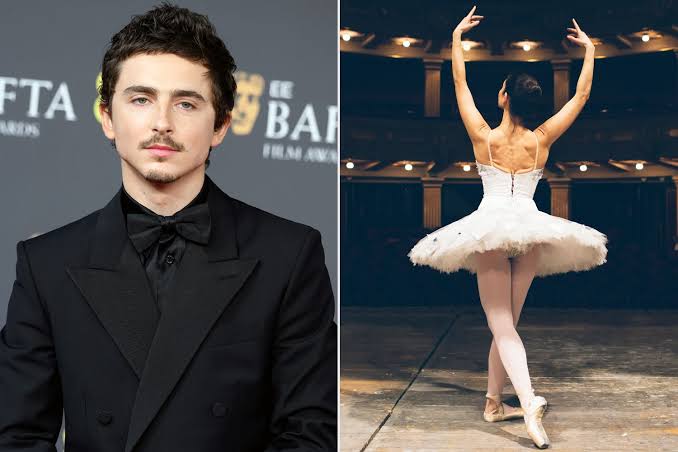
Timothée Chalamet’s comment about ballet did not just annoy dancers. It exposed a bigger cultural problem that people still struggle to treat serious art as important unless a celebrity brings it up first.
When Chalamet referred to ballet and opera as the kinds of art forms people talk about needing to “keep alive,” he sounded dismissive, even if that was not fully his intention. He later tried to soften the remark, but by then the point had already landed badly. For people who care about ballet, it sounded like he was writing it off as outdated, fragile, and culturally irrelevant.
That is why the backlash made sense.
Ballet is not some dead tradition hanging on by a thread. It is still one of the most physically demanding and artistically disciplined forms of performance. The problem is not that ballet lacks value. The problem is that mainstream culture often acts like it does.
What makes Chalamet’s comment more frustrating is that he is not an outsider to this world. As the piece notes, his mother and sister studied at the School of American Ballet, and he grew up in an environment surrounded by artists. That background makes the comment feel less like ignorance and more like carelessness. He should know better than most people how much talent, sacrifice, and training ballet demands.
Still, the comment touched on something real, and that is probably why it spread so quickly.
Ballet may still matter deeply, but it does not hold the same place in public culture that film, television, and celebrity culture do. Most people can name actors, singers, and athletes much faster than they can name dancers. Ballet often appears in public conversation only through stereotypes, trends, or dramatic pop culture depictions rather than through real attention to the art itself. The article points to examples like Black Swan, TikTok impressions of dance, and “balletcore” replacing real understanding of ballet as a living art form.
That is the part of this controversy that actually matters.
Chalamet’s comment was not interesting because it was rude. It was interesting because it revealed how ballet is seen by the broader culture: respected from a distance, but rarely centered. Beautiful, maybe. Important, maybe. But not treated as essential. That attitude is exactly what artists have been pushing against for years.
The irony is that the article makes this point directly: the mainstream media was talking about ballet largely because a celebrity mentioned it. If a dancer had said something dismissive about film, it likely would not have created nearly the same level of conversation. That says a lot about the imbalance Chalamet accidentally exposed.
In the end, Chalamet was wrong to talk about ballet as if it were some cultural afterthought. But he was not wrong about one thing: ballet does not occupy the place in mainstream culture that movies do. That is not because ballet is less meaningful. It is because our culture has become much better at rewarding visibility than valuing art.
That is the real issue his comment brought to the surface. Ballet is alive. The problem is that too many people only notice it when someone famous questions whether it matters.