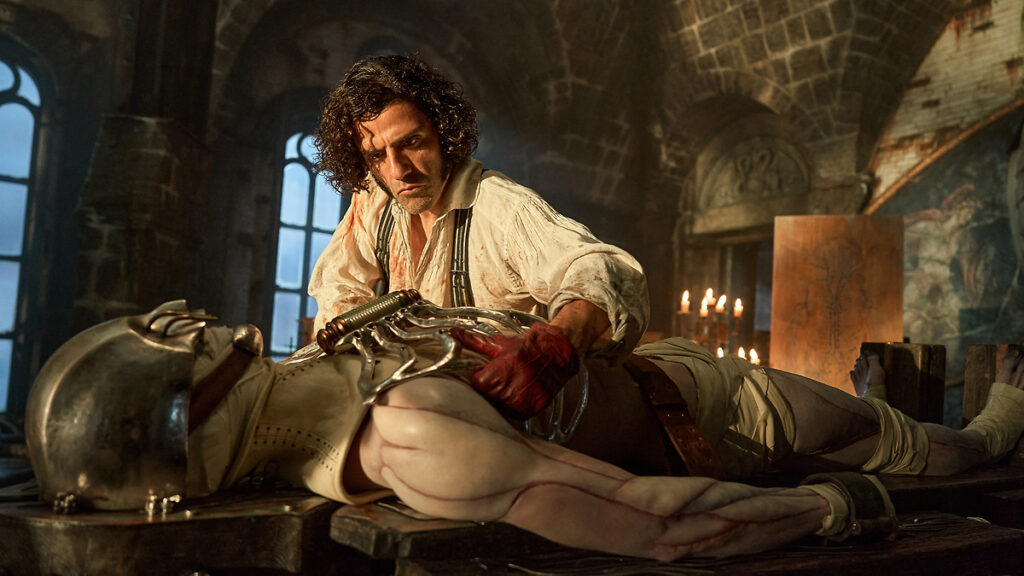
In the new film Frankenstein by Guilermo Del Toro, made in partnership with Netflix, we get another look at the question of who is the monster and who is the man in this retelling of author Mary Shelley’s work. Del Toro is a master at crafting practical sets that feel almost like another character in the film, and Frankenstein is no exception, with sets like Victor’s lab feeling so otherworldly that they continue to permeate social media weeks after the film’s release. There is a deep sense of a bone-chilling dread that using such sprawling practical sets is able to provide and, as a result, the viewer really feels like they are right there in the world that Del Toro is exploring, despite being on the other side of a screen. One creative choice that needs to be addressed is the centering of the men in Mary Shelley’s life interspersed throughout the film. With references to Shelley’s father Lord Byron, through a quote from him to end the film, and the creature, played here by Jacob Elordi, learning to read with her husband’s poem, Shelley feels like a weaker presence than in other adaptations. Since Frankenstein at its core is a story about the male ego and the ways in which men will burn the world because they feel that they are entitled to do so, it is upsetting to see that, even in death, Shelley has been put on the backburner in favor of the men in her life. This lays the groundwork for the creation of Frankenstein. Jacob Elordi stuns as the creature and evokes a sense of fragility and youth in his portrayal that is unforgettable, with Oscar Isaac nailing the cruelty and anger that are central to Victor Frankenstein’s characterization. We see the horror of creation and ambition in this piece, and as a result, the more than two hour journey that Del Toro takes us on during this film is winding but rewarding. The Creature and his enlightenment throughout the film acts as a window for the viewer to see the pain and sorrow inflicted on those seen as others in a deeply literal sense. At one point, the creature says, “If you are not to award me love, then I will indulge in rage. And mine is infinite!”: central to the final confrontation of the film. Are we supposed to be sympathetic to the plight of Victor’s life and struggles to chase this dream of creation, or are we supposed to feel for this Creature made by Victor and then cast aside in favor of making something better? This question permeates the film. It is a good reminder of the ways that progress can actually hinder life, said in no uncertain terms by Victor: “In seeking life, I created death”. Del Toro crafts a masterpiece with Frankenstein and a return to the tradition of stories steeped in gothic inspiration, which one can only hope will inspire more people to check out Mary Shelley’s work and learn more about the ways that Shelley truly changed the genre as a whole, and still remains so steeped into the public consciousness even today.
In Seeking Life, I Created Death: A Deeper Look Into The Now Gothic Horror Film Frankenstein