
By: Aisha Mustafa ’25 – Published in Fall 2024 Issue 2
NASA’s Nancy Grace Roman Space Telescope is an Infrared telescope planned to be launched into space where it will remain for five years, collecting data. There, it will capture wide scale images of galaxies allowing us to gain a better understanding of the layout of the universe. This telescope has a field of view 100 times greater than the Hubble telescope with a similar resolution allowing us to see the universe in ways we’ve never seen before. Since the original concept started in the early 2000s, NASA has been working on this telescope for two decades. As of September 2024, NASA has completed the spacecraft bus which will take the telescope to its desired location, the 2nd Lagrange Point about 1.5 million kilometers away from earth where the stable gravitational force will allow it to stay. If things continue to proceed on track, the launch date for this project will be in May 2027.
The goals of this mission are to use the images of the universe at the largest scale yet to understand its development as well as explore the mysterious force responsible for the rapid acceleration of the expanding cosmos. According to to the Harvard-Smithsonian Center for Astrophysics, scientists once believed that gravity would slow the expansion of the universe. However, with the discovery of a mysterious force named dark energy, galaxies are observed to be moving further away from each other and the expansion of the universe appears to be accelerating. With the use of the Roman telescope, we will be able to observe this change on a much larger scale, allowing for a greater understanding of this mysterious force. Additionally, this telescope will use a phenomenon known as microlensing, which involves the bending of light, as well as a coronagraph instrument. This instrument will help astronomers recognize exoplanets that have never been seen before by blocking out the star’s light and observing the much fainter planets that orbit.
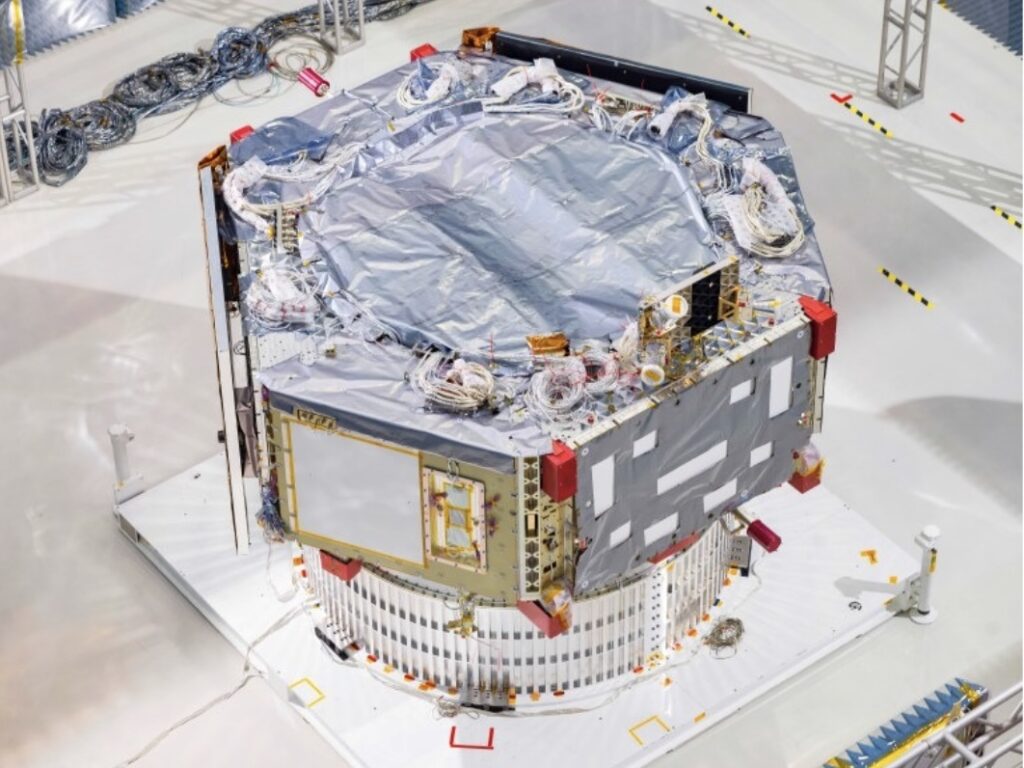
The Covid-19 pandemic as well as other factors caused some setbacks in the development of this project, yet the launch date remains on schedule. This, however, cost an additional $400 million dollars for NASA to uphold. As of today, there are still significant risk factors that come into play, not to mention the possibility of space debris impacting the telescope. Although the risk of debris is relatively low in the L2 Point, there are other risk factors that come into play. The recording of data is reliant on several organizations’ ability to successfully downlink data, especially NASA’s Deep Space Network. According to NASA’s audit, there are expensive necessary upgrades for this mission to be successful, and thanks to the help of the White Sands complex in New Mexico, the necessary upgrades should be set by 2026, maintaining the expected launch date.