
By: Asavari Gowda ‘25 – published in Fall 2024 Issue 3
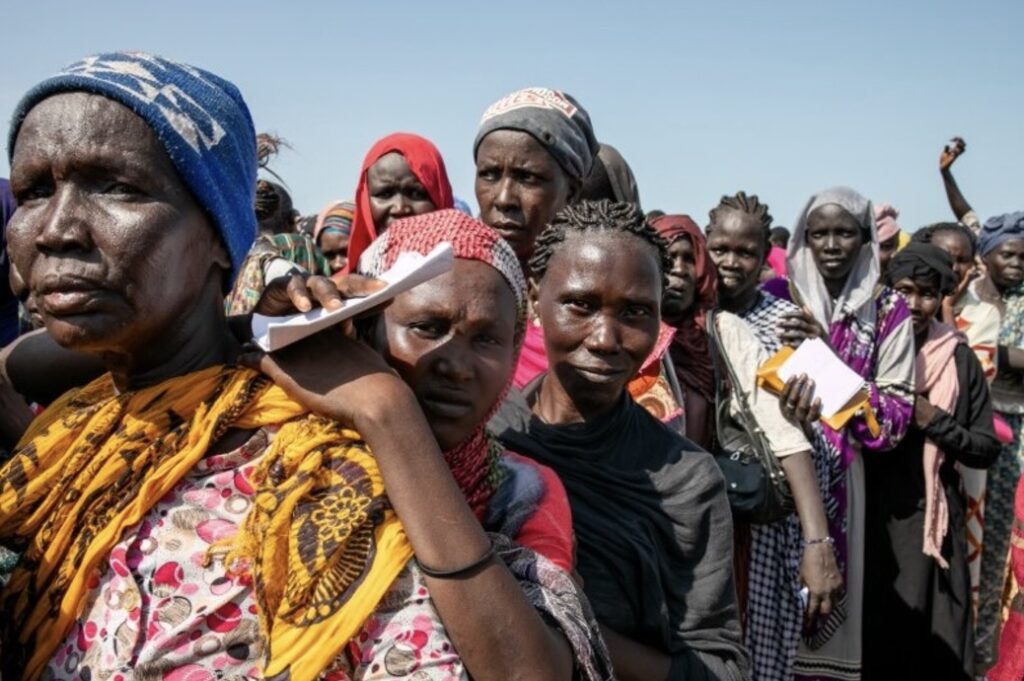
Since April 15, 2023, the people of Sudan have been forced to endure an incessant state of deadly warfare, famine, displacement, and merciless violence. The conflict that escalated the country to this dire situation is between the Sudanese Armed Forces (SAF) and the paramilitaries of the Rapid Support Forces (RSF).
Both groups had previously staged a joint coup to overthrow former dictatorial ruler Omar al-Bashir. Bashir led an oppressive regime for three decades, during which he imposed draconian rules in line with his strict interpretation of Sharia law, persecuted religious and ethnic minorities, and employed private militias and morality police to keep his constituents subservient. Possibly his most gruesome act was overseeing the Darfur War, a genocide meant to ethnically cleanse non-Arab populations, including the Fur, Zaghawa, and Basalt peoples in Western Sudan. Bashir actually created the RSF from the Janjaweed militia, an Arab-majority armed militant group formed to fight the Darfur War and southern Sudanese rebels. According to the Global Conflict Tracker, 200,000 people died in the first two years of the Darfur War and 100,000 more lives have been claimed in the last two decades. Bashir’s forces were responsible for brutal attacks, displacements, sexual violence, kidnapping, and numerous other criminal violations of human rights.
In 2013, Janjaweed was formally organized into the RSF to repress rebellious uprisings, guard the border, and keep Bashir safe. Nevertheless, the growing calls for democracy in Sudan ultimately led the RSF and SAF to stage a coup in 2019 that ousted Bashir and put both groups’ military leaders in power. The plan had been to integrate RCF into the SAF over time. However, lack of clarity as to how long this integration would take and disagreements over exactly who would be calling the shots led to internal conflict that culminated into an all-out war that began on April 15th.
The UN describes the war as “one of the worst humanitarian nightmares in recent history.” The Guardian reports that 26 million people face severe food insecurity, the death toll is in the tens of thousands, and 11.3 million people have been forcibly displaced, including 2.95 million who have left the country altogether. This displacement has resulted in heavy refugee settlements in Chad and South Sudan, overwhelming underfunded aid agencies.
Throughout the many complexities this war is hounded with, one thing has become abundantly clear: women are experiencing disproportionately more suffering due to gender-based discrimination. UN Women put out a Gender Alert stating that the need for services related to gender-based violence was up to 6.7 million in December 2023 and will be even higher now. The cases predominantly affect women and girls in Khartoum, Darfur, and Kordofan. UN Women stated that “any cases of abuse [are] going unreported due to a lack of adequate support and fears of stigma and retribution.”
In terms of concurrent famine, 64% of female-headed households experience food insecurity compared to 48% of male households. There is an extreme lack of adequate accessibility to healthcare services, affordable water, sanitation, and hygiene. The UN states that 80% of internally displaced women are unable to secure clean water due to affordability, safety concerns, and distance. Possibly the most devastating reality is that three-quarters of school-aged girls are no longer in school, increasing their risk of child marriage and female genital mutilation.
Much of the violence against women can be pinned to the RSF, as they continue their rampage to take control of Sudanese states. The RSF will kill anyone who protests their campaign and rape the women and girls who are part of that resistance. BBC reports several women in Gezira who have taken their lives after being raped by RSF soldiers. RSF spokesperson Nizar Sayed Ahmed denies the accusations as false but the UN has compiled a staggering 80-page report documenting at least 400 survivors of “conflicted-related sexual violence” up to July 2024.
The situation in Sudan paints a jarring yet all too familiar picture of a war on women occurring concomitantly with the war between the two forces attempting to acquire power. Regardless of the reasons why wars come about, they are almost never justified when it comes to the treatment of women. Ultimately, war is about power. And the abhorrent treatment of women and girls is simply another way to attain it.