
By: Asavari Gowda ‘25 – published in Fall 2024 Issue 1
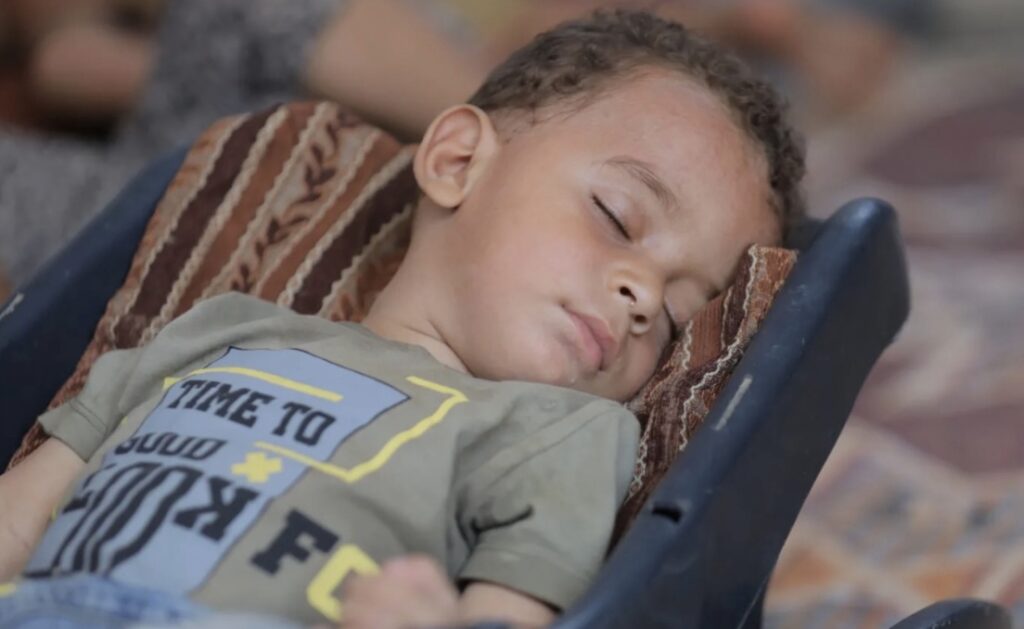
At the end of August, BBC and various other sources reported the first recorded case of polio in Gaza in 25 years. The cause of the discovery? A 10-month-old baby had been found partially paralyzed. Plans to pause fighting in Gaza were immediately made so that children could be vaccinated.
Polio is a highly contagious disease that mainly affects children under the age of five. It is spread through the infected person’s feces, sneeze, or cough droplets. As a result, simply sharing utensils or being in close quarters, especially without optimal hygiene, can cause an outbreak. The dire conditions in Gaza create an ideal environment for polio to proliferate. The symptoms of polio are not very unique. They include signs of the common cold such as high temperature, a sore throat, headache, aching muscles, neck stiffness, stomach pain, and nausea.
Thus, unless medical support is readily accessible, early polio symptoms can easily be overlooked. Serious issues occur when the virus reaches the brain and other parts of the nervous system, which happens in one out of every 200 cases. Once the infection reaches the nervous system, irreversible paralysis, usually of the legs, can follow.
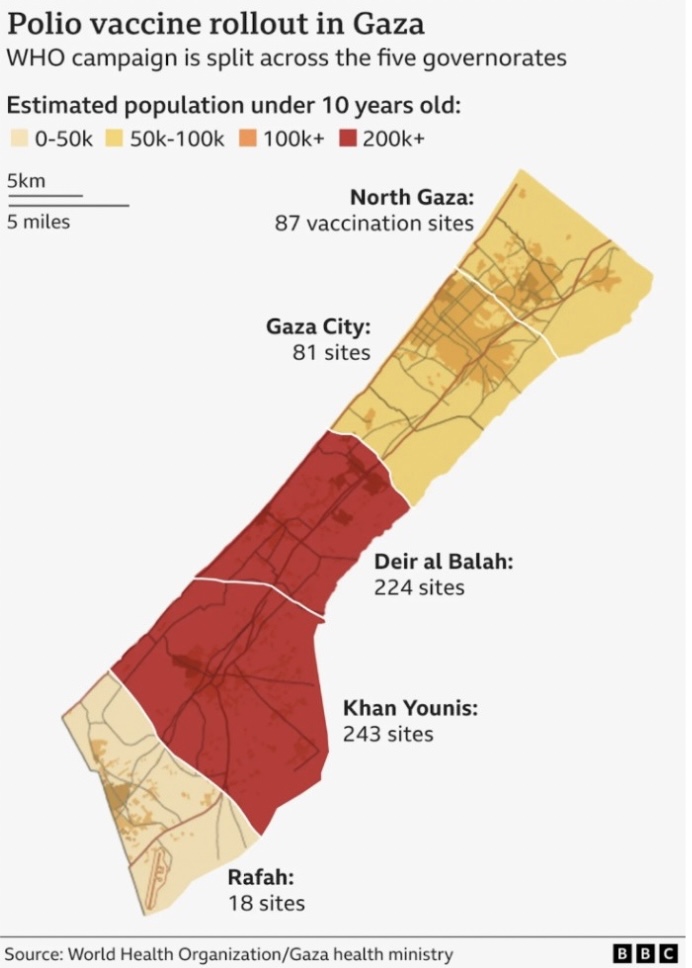
BBC reports that humanitarian groups believe the reemergence of polio in Gaza is primarily due to the disruption of regular child vaccination programs and the damage to water and sanitation systems that have resulted from the Israel-Hamas War. Before the War, vaccine rates were at 99%. They have now dropped below 90%. The World Health Organization stated that the plan for the “humanitarian pauses” was to stop firing between 6 a.m. and 3 p.m. local time daily for three days so that United Nations healthcare workers could go out and start vaccinating the 640,000 children under the age of 10.
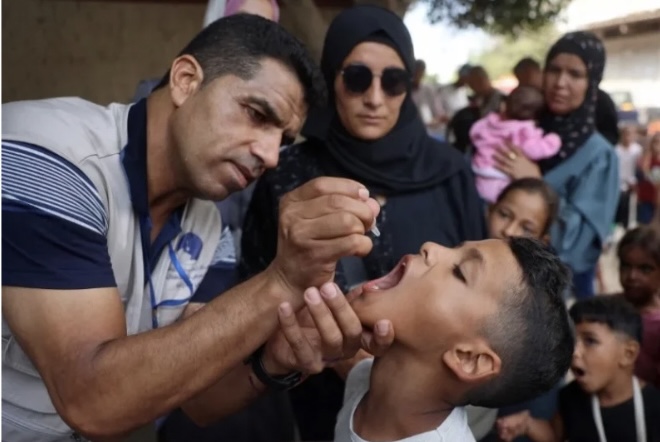
Unicef USA reports that the first round of the emergency vaccination campaign vaccinated 90% of the children under 10 years old in the Gaza Strip, which the WHO states is the necessary percent coverage of each round of vaccinations needed to stop the outbreak and prevent the international spread of polio. In phase 1 of the vaccine rollout, the WHO states that 187,000 children below 10 years old were vaccinated with novel oral polio vaccine type 2 (nOPV2) in central Gaza. The initial target was 157,000 children but there had been a large population movement of people towards central Gaza and an expanded coverage area for the humanitarian pause, allowing for more children to be vaccinated. Dr. Richard Peeperkorn, a WHO Representative in Palestine, says “It has been extremely encouraging to see thousands of children being able to access polio vaccines, with the support of their resilient families and courageous health workers, despite the deplorable conditions they have braved…All parties respected the humanitarian pause.” There are hundreds of teams with thousands of healthcare professionals working to get this vaccine distributed. Plans for a second phase of vaccine rollout in southern Gaza were made for September 5-8 and a final third phase in northern Gaza from September 9-11 were also carried out.
Chessa Latifi, the deputy director of emergency preparedness and response at Project HOPE, shares that the biggest challenge with the vaccine rollout has been the breakdown of the healthcare system in Gaza, as reported by Al Jazeera. “The vaccine campaign doesn’t address the core issue, which is the lack of hygiene, sanitation, and clean water. Because if we had those components…we wouldn’t have polio.” Although the multi-phase vaccine rollout campaign has been successful, as Latifi says, it is only a bandaid. The conditions in Gaza are far from liveable for any human, let alone children.
The resurgence of Polio seems like a step back in time and paints a clearer picture of the unsurvivable environment civilians are being forced to endure as a result of territorial warfare. The Polio outbreak may have come as a warning to the global community – one still recovering from a Pandemic – that pathogenic viruses can overpower any amount of military weaponry and have no respect for the land borders that we draw. Making healthcare accessible, even in the most dire of conditions, is necessary for our survival.